
Movement-Building
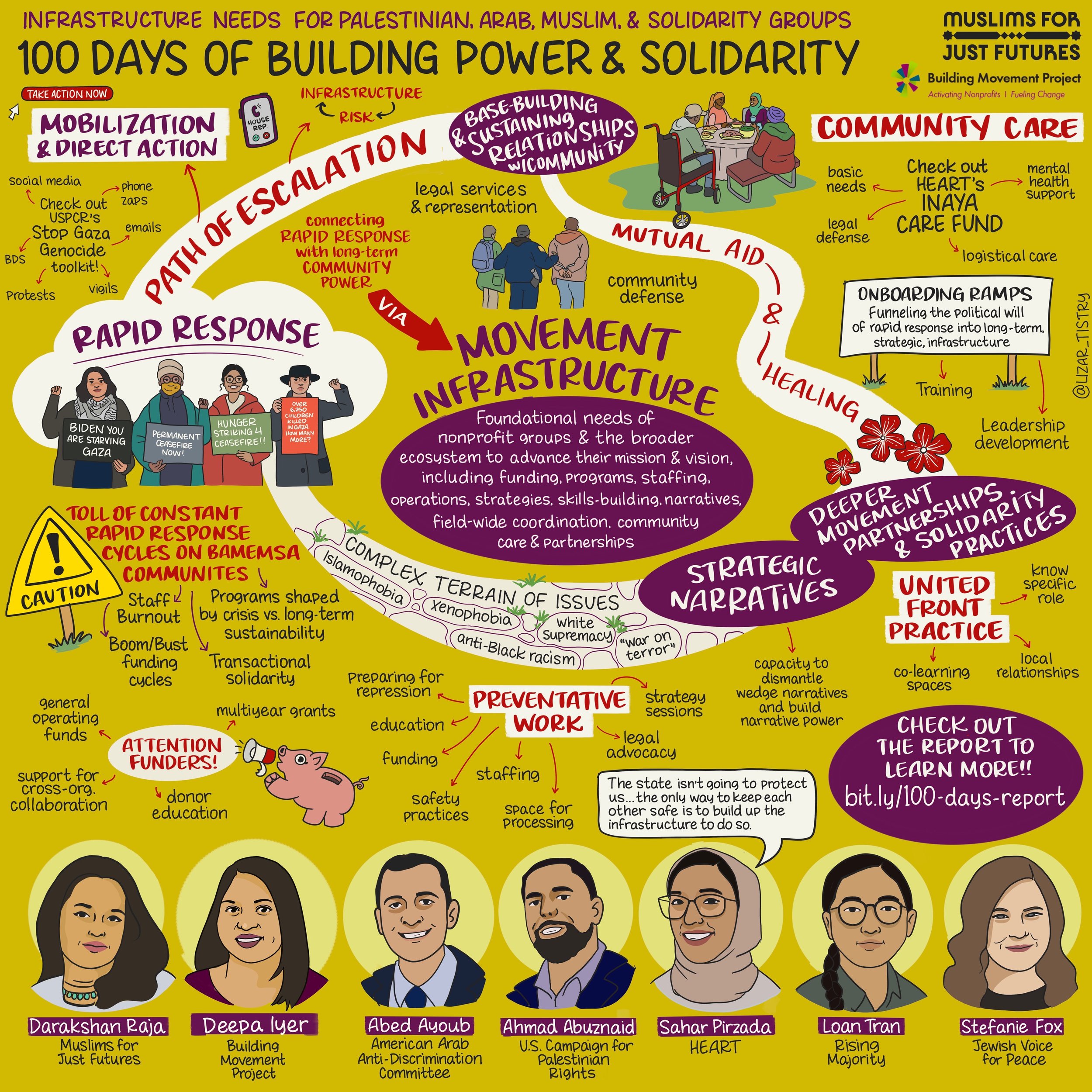
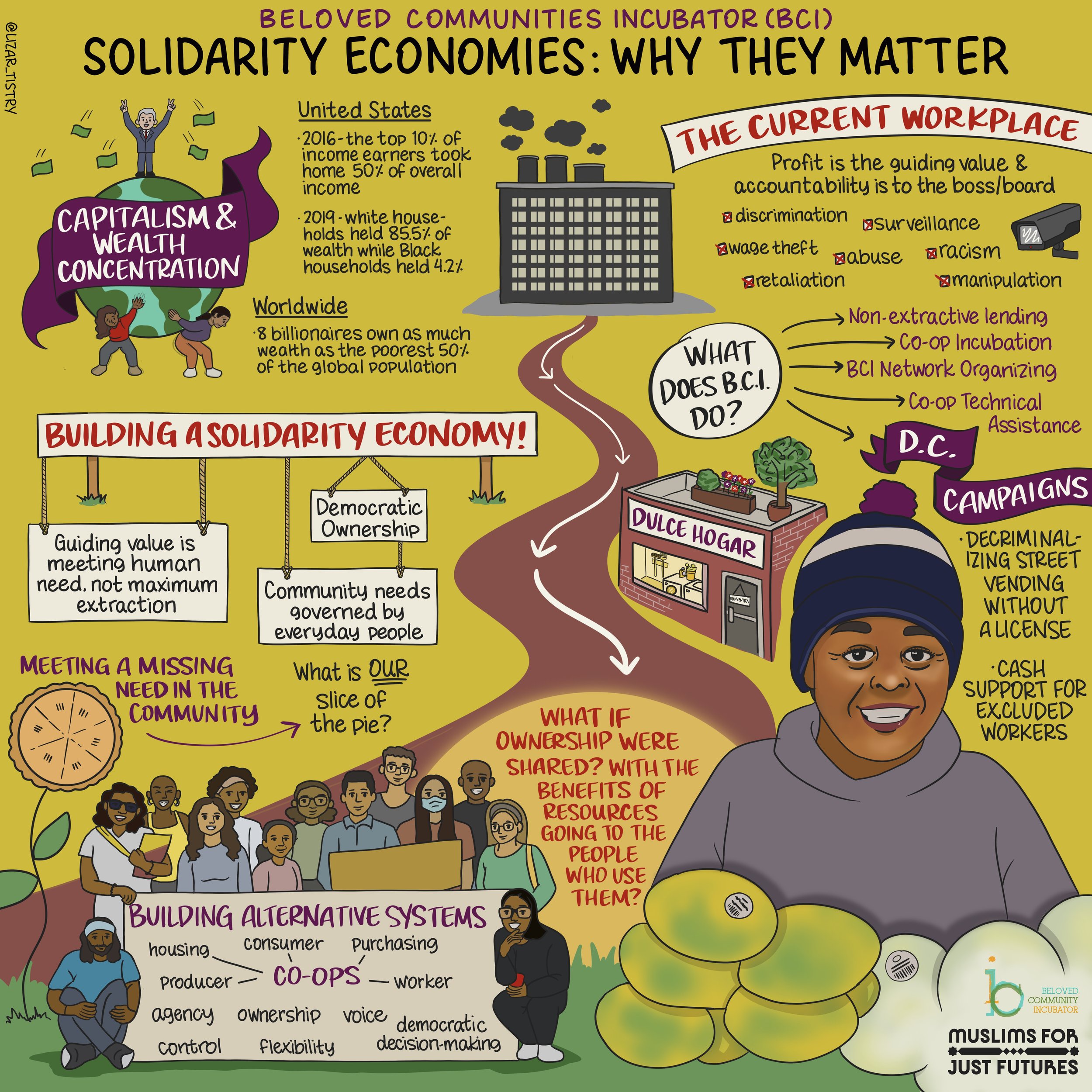
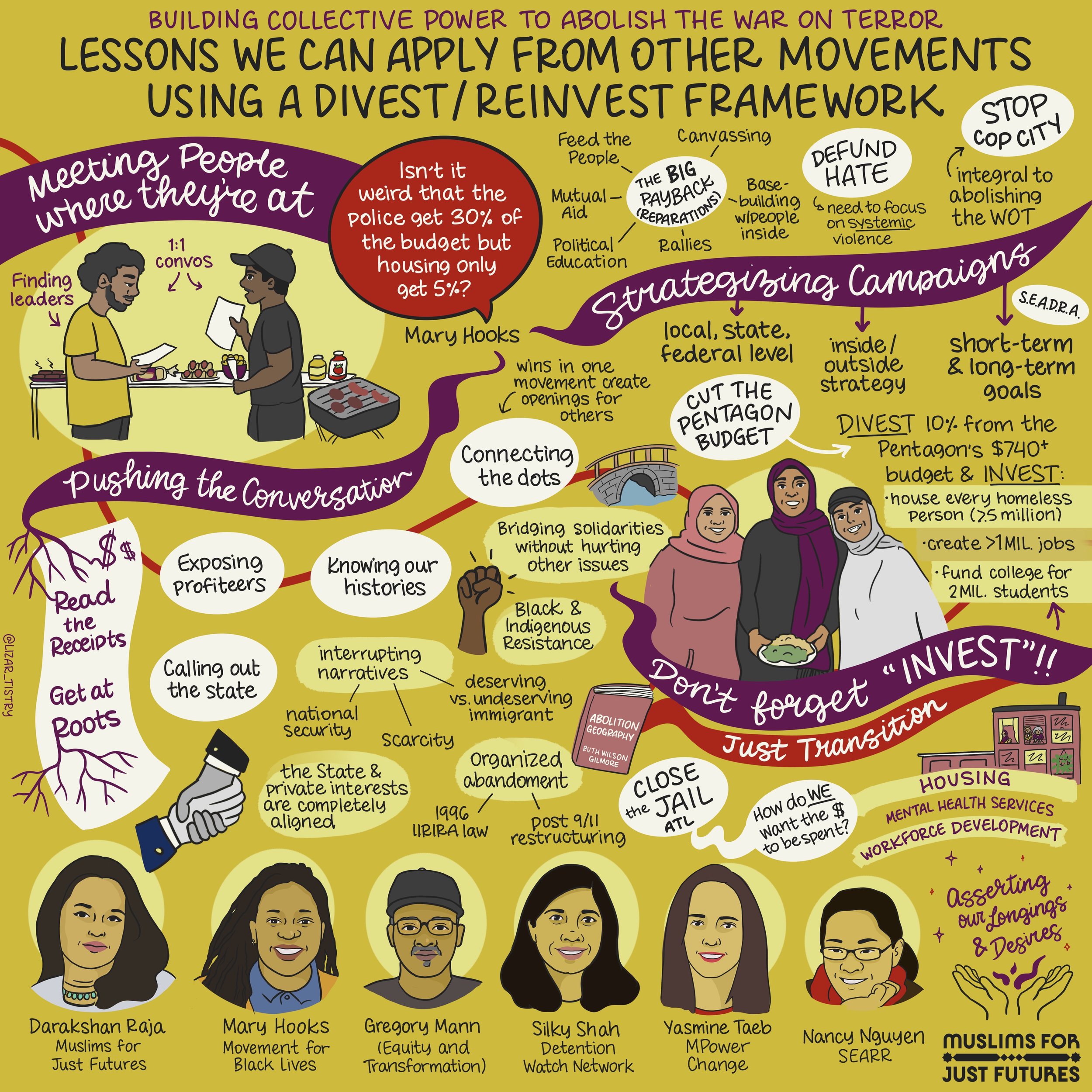
Movement-building is one of our core strategies. MJF convenes groups nationally who are values-aligned and committed to a divest and reinvest framework. One of our core movement-building projects is being a co-founder and co-anchor of the Muslim Abolitionist Futures National Network that seeks to build grassroots power to abolish the Global War on Terror, structural Islamophobia, gendered Islamophobia and invest in communities of care. In addition to co-anchoring the national network, we build relationships with other movement-building networks who are aligned with our work in order to integrate our work into broader movement work.

Investing in Abolitionist Power
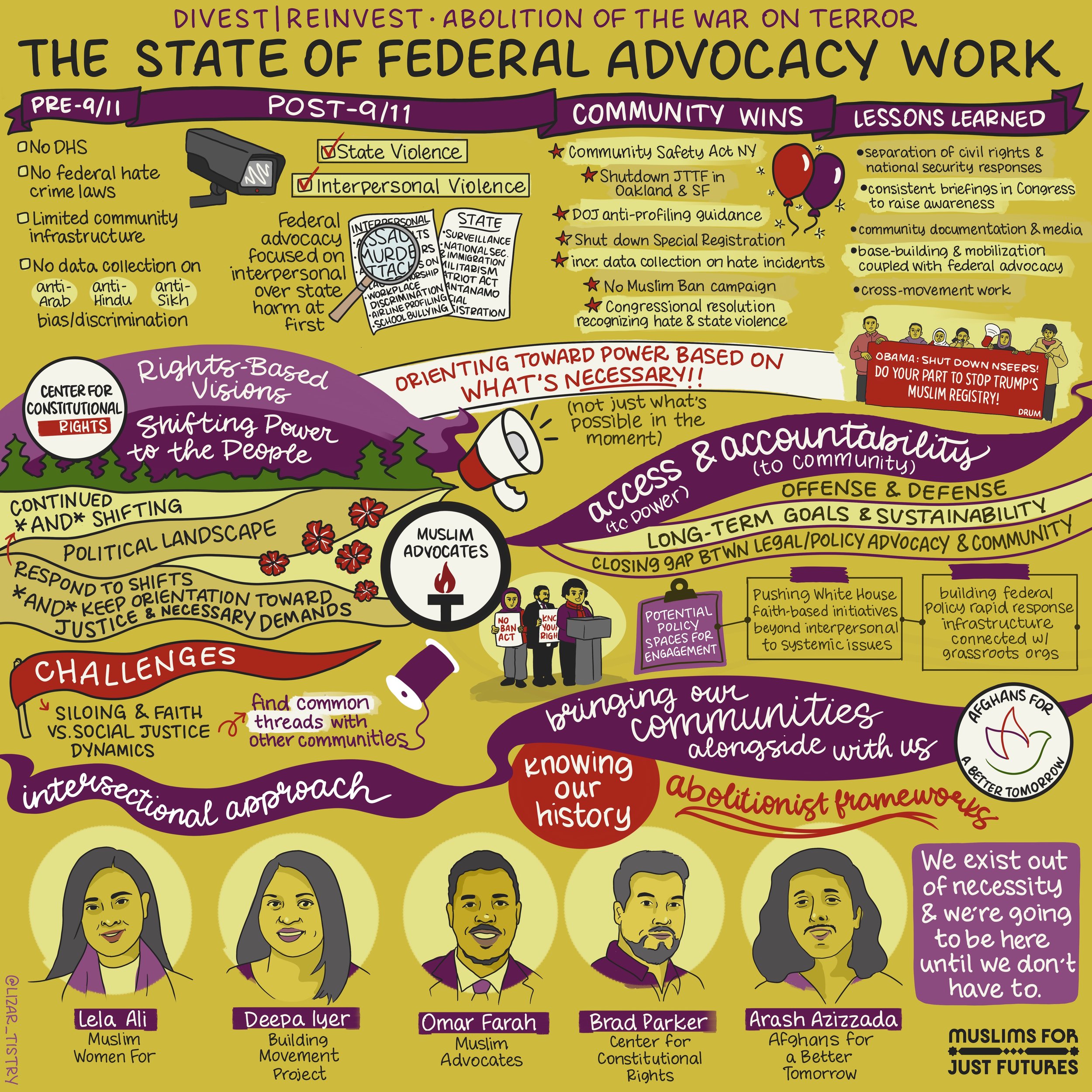
The Muslim Abolitionist Futures Network is a national collective of grassroots groups that hold a cross-movement network to abolish the War on Terror and move towards a vision of collective healing, safety, dignity, and freedom for our communities with clear coordination of campaigns and movement demands.
Our collective groups focus on a cross-section of issues that fall under fighting the War on Terror: local anti-surveillance campaigns, government accountability and transparency efforts, reimagining community safety, and community organizing and leadership development of impacted communities, civic engagement efforts, political education, and intersectional movement building efforts. MJF’s specific role is to co-anchor the national network and hold the abolition, policy, and advocacy working group.
Updates
Check here for general updates on the Muslim Abolitionist Futures National Network.
Florida’s targeting of CAIR, which carries profound consequences for Muslim communities in Florida and across the country. Persecuting the nation’s largest Muslim civil rights organization sends a dangerous message that Muslim advocacy itself is suspect. This designation threatens CAIR’s ability, and by extension CAIR Florida, to provide essential legal representation, advocacy, and community support to Floridians. This targeting also affects the broader network of Muslim advocacy and membership-based organizations nationwide who have members or partners operating in Florida. Furthermore, at a time of escalating political violence toward Muslim communities, stripping Florida Muslims in the South of access to national advocates would deny countless individuals and families critical institutional support. This should alarm any national advocacy and membership-based group that works to defend the rights of targeted community members. If states can create new designation regimes for the purpose of preventing national and local advocacy organizations from representing or supporting particular communities, it establishes a dangerous precedent. Such a framework would threaten the ability of national advocacy and membership-based organizations across issue areas to fulfill their missions.